Airbnb’s New House Rules: What Property Managers Need to Fix Before Nov 20
Airbnb's new house rules apply to bookings made from Nov 20. Here's what changed, what to fix in your listings, and how it affects owner statements.
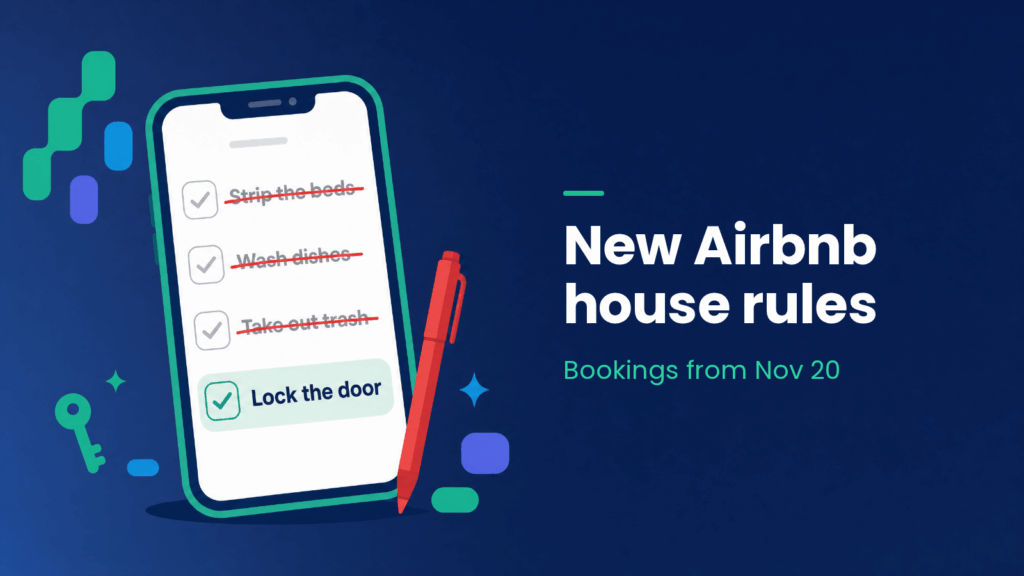
Airbnb just took a red pen to the checkout list. For bookings made on or after November 20, 2026, hosts everywhere can no longer require guests to strip beds, run the dishwasher or haul trash to the curb. Fines are out, surprise fees are out, and almost every house rule now has to live in one place: the listing.
Guests clearly come out ahead. Property managers get a to-do list, plus a few owner conversations that are better started by you than by your owners.
Here’s what changed, what to fix this month, and what it means for the money.
What changed (the short version)
- All rules in one place. Airbnb’s new house rules editor went live on Oct 20. Every rule and request now sits in the Listing editor.
- A short list of binding rules. These are maximum overnight guests, quiet hours, events, pets, smoking and vaping, commercial photography and filming, and locking up at checkout.
- Light requests are fine but optional. You can ask guests to put dishes in the sink, gather used towels, sort trash and recycling into indoor bins, and switch off the AC when they leave. Guests can say no.
- Effortful chores are out. You can’t require guests to wash and put away dishes, strip beds, start laundry or take trash off-site. The test is whether it’s work a cleaner would normally do.
- No fines or penalties. Damage goes through AirCover instead.
- Every fee must be in the price at booking. You can’t charge later for something you advertised.
- Security deposits are mostly gone. Most hosts can’t charge one. Hosts connected through software can collect one off-platform if it’s shown in the fee field before booking. It must be refunded in full within 7 days of checkout if there’s no damage.
- Separate contracts and guest data are restricted. Side agreements are allowed only when the law or an association requires them, for optional amenities, for stays of 28+ nights, or for Airbnb Luxe. By default, you can’t collect ID copies, financial details or contact details.
- Existing bookings are grandfathered. Reservations made before Nov 20 keep the rules that were on the listing at booking.
Airbnb enforces this with flags in the editor, a review queue, guest-facing alerts such as “includes cleaning requests,” and lower search visibility for listings that keep violating the rules.
Also note that a rule shared only by message, door sign or in person doesn’t count. If it isn’t in the listing, it isn’t a rule.
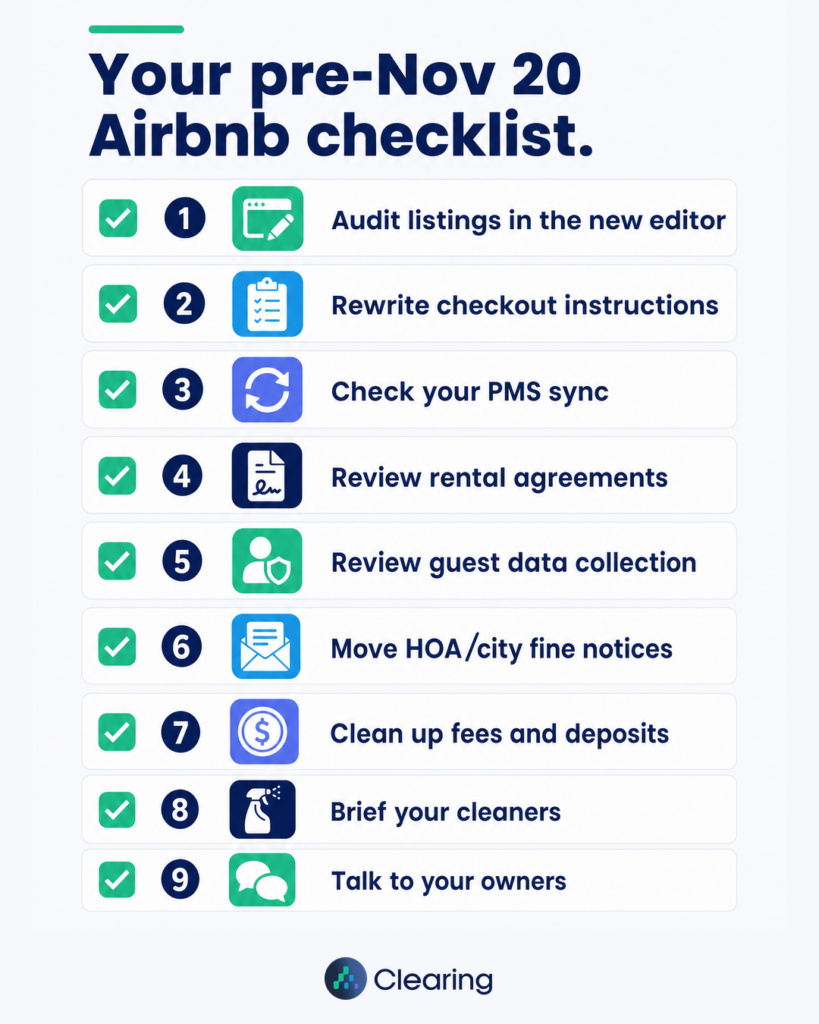
Your pre-Nov 20 checklist
- Audit every listing in the new editor. Pull rules out of welcome messages, guidebooks and door signs, and put them in the listing.
- Rewrite checkout instructions. Split them into binding rules (lock up, return keys) and friendly requests (dishes in the sink, towels in a pile).
- Check your PMS sync. Make sure your next sync doesn’t overwrite the fixes you just made in Airbnb.
- Review rental agreements. If yours doesn’t fit one of the four exceptions, retire it. If it does, you get one public PDF per listing, so remove any personal information first.
- Review guest data collection. Look at pre-arrival forms, ID uploads, WiFi login portals and any app guests must register for to get in.
- Move HOA and city fine notices. They go in the listing’s dedicated section, not in your requests.
- Clean up fees. Anything you charge must show at booking. If you collect a security deposit, confirm you qualify, show it in the fee field and set up a reliable 7-day refund process.
- Brief your cleaning team. Turnovers just got longer. Adjust schedules before the Nov 20 bookings start checking out.
- Talk to your owners. More on that below.
The part nobody’s talking about: the money
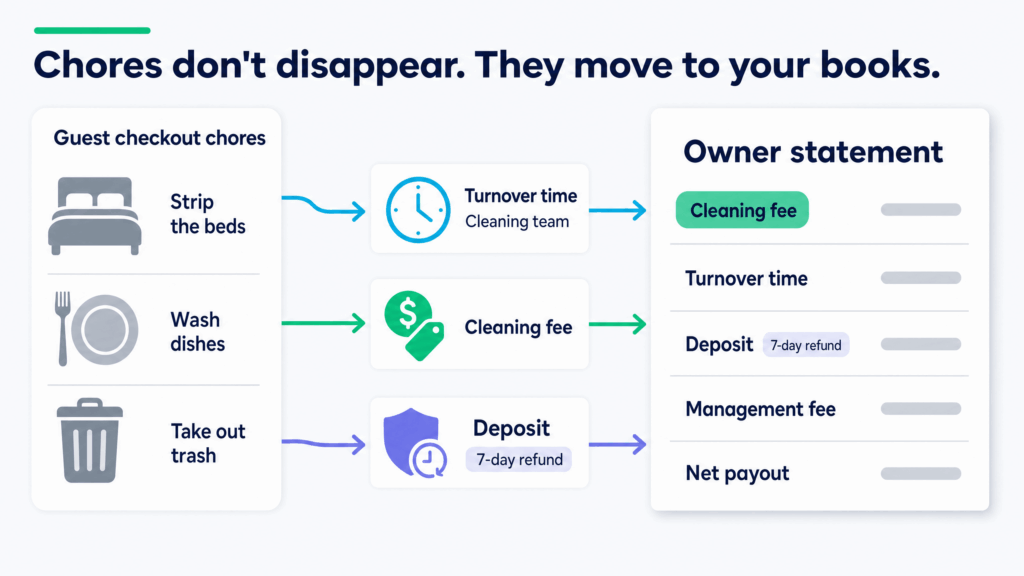
Chores don’t disappear. They move onto somebody’s payroll, and that changes the numbers.
- Cleaning fees will likely go up. That raises the questions of who sets the new fee, who keeps it and how it splits between you and the owner.
- Fine income is gone. If guest fines offset costs on any property, that line is now zero. Damage recovery runs through AirCover claims, and every reimbursement has to land on the right owner’s ledger.
- Deposits have a deadline. An off-platform security deposit isn’t your money. It’s the guest’s until the 7-day window closes, and in many jurisdictions it’s held in trust. Each one has to be tracked by reservation and refunded on time.
- Owners wrote many of those checklists. The strict “strip the beds, start the dishwasher” lists often came from owners. They’ll want to know why it changed and what it costs.
Your owners are about to ask questions
Airbnb decided guests deserve to see every fee before they book. Your owners have been thinking the same thing about their statements for years.
When an owner sees a higher cleaning line, a missing fine or a new turnover cost, they’ll ask about it. The answer should take one click, not an afternoon in a spreadsheet. Three things help:
- Write down any change to your fee split before Nov 20, and update management agreements if the split changes.
- Tell owners before they notice. A short note now beats a confused email after the first statement.
- Make the statement do the explaining. Each line should show where the money came from and where it went.
Here’s an owner note you can adapt:
Subject: Airbnb’s new checkout rules (and what they mean for [Property])
Hi [Owner name],
Airbnb is updating its house rules for all bookings made on or after November 20. Guests will no longer be asked to strip beds, wash dishes or take out trash, and hosts can no longer charge guest fines.
Here’s what we’re doing for [Property]:
- Updating the listing so it stays compliant and keeps its search ranking
- Adjusting turnover time with our cleaning team
- [Adjusting the cleaning fee from $X to $Y / Keeping the cleaning fee the same]
Any change will show clearly on your next statement. Happy to walk you through it anytime.
[Your name]
Make your own rules visible too
If you’re already changing cleaning-fee splits and deposit handling, it’s a good time to get those rules out of spreadsheets and into a system everyone can see.
That’s what Clearing does. It’s trust accounting built for short-term rental property managers. It reconciles your Airbnb bookings automatically using rules you set for each owner, and it produces owner statements that show where every dollar went. When a fee split changes, you change the rule once and it applies everywhere. It works with QuickBooks, so your management books stay where they are.
The timing works out, too. You’re already repricing for Nov 20, and most property managers switch accounting on Jan 1. You can do both in one pass.
Try Clearing with a 30-day money-back guarantee.
FAQ
- When do Airbnb’s new house rules take effect?
For bookings made on or after November 20, 2026. Existing bookings keep the rules that were on the listing when the guest booked. - Can Airbnb hosts still charge a cleaning fee?
Yes. The policy doesn’t add new limits on cleaning fees, but every fee must be included in the price shown at booking. - Can Airbnb hosts charge a security deposit?
Most can’t. Hosts connected through software can collect one off-platform if it’s shown in the fee field before booking, and it must be refunded in full within 7 days of checkout if there’s no damage. - What can hosts still ask guests to do at checkout?
Locking up is a binding rule. Putting dishes in the sink, gathering towels, sorting trash indoors and turning off the AC are allowed as optional requests. - What happens if a listing doesn’t comply?
Airbnb may flag and review the rules, alert guests, and lower search visibility for repeat violations.