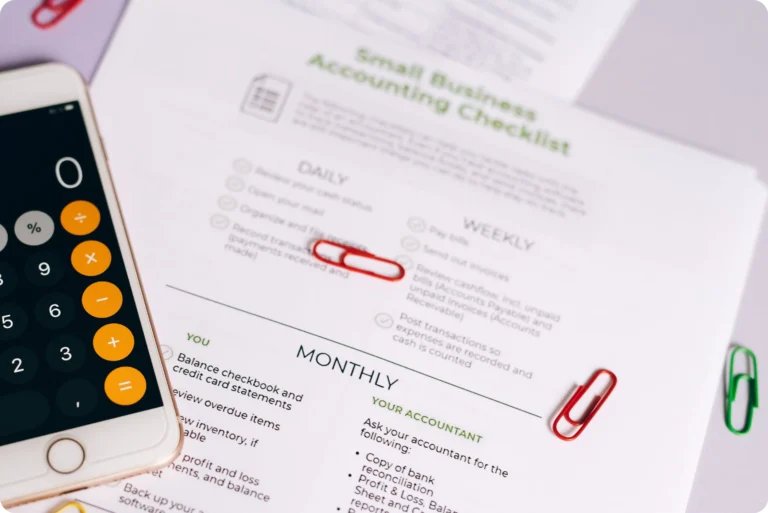
Trust Accounting Year-End Checklist for Short-Term Rental Property Managers
A year-end close checklist for short-term rental managers: reconcile trust accounts, clear liabilities, finalize owner statements, and prep for 1099s.

Quick summary: A year-end close for a short-term rental management company means finishing the books, reconciling every trust account against bank and booking activity, clearing old liabilities, and confirming each owner’s year-to-date statement before tax forms go out. The checklist below covers ten steps in order, with a summary table at the end.
Year-end is when twelve months of timing gaps, one-off adjustments, and uncategorized transactions have to resolve at once. For property managers holding money for owners and guests, the trust account has to balance, each owner’s numbers have to tie out, and tax reporting depends on both.
In this article we’ll cover:
- Why year-end is mission critical in STR trust accounting
- What a year-end close involves when you manage trust accounts
- A year-round timeline for the close
- The ten-step year-end close checklist
- A one-page summary table
- Where Clearing’s AI-powered trust accounting fits
Why year-end is mission critical in STR trust accounting
For short-term rental (STR) property managers, the end of the year isn’t just another calendar milestone. It’s a high-stakes checkpoint for financial integrity and regulatory compliance. If your business manages owner funds through trust accounting, the closing process affects how you meet state requirements, safeguard client relationships, and position your management portfolio for growth or a future sale. Requirements vary by state, so check with your state’s real estate commission or licensing board. The North Carolina Real Estate Commission, for example, requires brokers who hold trust money, including vacation rental managers, to reconcile their trust accounts monthly.
Deferred cleanup leads to risk: unresolved liabilities, misallocated funds, unreconciled transactions, and unsent owner statements can carry compliance consequences, tax headaches, and loss of owner trust. Year-end is your opportunity to systematically address any discrepancies and make sure your books withstand both internal and external scrutiny.

What a year-end close involves when you manage trust accounts
A year-end close is the process of finalizing a business’s financial records for the year so they are complete, accurate, and no longer changing.
Short-term rental managers have an extra layer. Money collected for owners and guests (rental income, guest deposits, security deposits) is not the management company’s money. The close has to prove two things: that the company’s own books are right, and that every dollar held in trust is accounted for, owner by owner.
Two related tasks do most of that work. Bookkeeping organizes: it records and categorizes each payout, fee, and expense by property, owner, and channel. Reconciliation verifies: it checks those records against what actually happened in the bank and in your booking data. A close needs both, in that order, because reconciling uncategorized books only tells you something is off, not where.
Year-end close timeline: what happens when
A year-end close goes faster when most of the work is already done month by month. The last few steps depend on December’s bank statements, which only arrive after the year ends.
| When | Focus |
|---|---|
| January to October | Keep bookkeeping current and reconcile each trust account monthly. Collect W-9s from new owners and vendors as they’re onboarded. |
| November | Bring any unreconciled months up to date. Follow up on missing W-9s. Start the liability review. |
| December | Reconcile November. Review year-to-date owner statements. Tell owners what to expect and when. |
| Early the following year | Reconcile December once bank statements arrive. Finalize owner statements and tax forms. Close and lock the period. |
The year-end close checklist
1. Finish the books: categorize every transaction
Every transaction for the year needs a category, a property, and, where relevant, an owner. Look for:
- Payouts that were recorded as a single deposit instead of being broken into rent, cleaning fees, channel fees, and taxes
- Expenses with no property assigned, or assigned to the wrong owner
- Owner-billable expenses (repairs, supplies, maintenance) that were paid but never passed through to the owner’s statement
- Card and vendor charges with no receipt attached
A consistent, documented system makes this step much shorter. Clearing’s step-by-step system for short-term rental bookkeeping walks through payout breakdown and attribution in detail. If you’re several months behind, Clearing’s guide to catching up on short-term rental accounting before tax season covers how to triage a backlog first.
2. Reconcile bank and booking transactions
Next, match the books against the bank and against booking data. Every deposit should trace back to specific reservations. Online Travel Agency (OTA) payouts, such as Airbnb or Vrbo, should be allocated fully and accurately across properties and dates. Automated imports in tools like Clearing can help minimize missed income.
Watch for items that sit across the year-end boundary:
- Channel payouts initiated in late December that land in January
- Stays that begin in December and end in January, where your accountant’s policy decides which year the revenue belongs to
- Refunds, chargebacks, and resolution payments that arrived weeks after the original booking
These are normal reconciling items. The goal is a documented explanation for every difference. For how payout matching works across channels, see Clearing’s guide to payment reconciliation for vacation rental payouts.
Addressing these reconciling items now reduces the risk of last-minute surprises or owner questions when annual statements go out.
3. Run a three-way reconciliation
With bank and booking activity reconciled, check that the trust account itself balances. A three-way reconciliation verifies that the trust account balance on the bank statement, your internal ledger totals, and the per-owner and per-property sub-ledger balances match exactly. If the bank and the books agree but the individual balances don’t add up to the same total, a transaction has been missed or credited to the wrong owner or guest. Use the reconciliation tools in your trust accounting software, or export the relevant data for manual verification if needed. Clearing’s monthly trust account reconciliation workflow covers the mechanics.
Differences found here can trace back to the next two steps: liabilities that should have been cleared, or balances assigned to the wrong owner.
4. Clean up liabilities
Money held for someone else should always have a matching reason to still be there. Review:
- Guest advance payments for future stays, which should match open reservations
- Security deposits for stays that have already ended, which should be refunded or claimed
- Owner payables that were scheduled but never sent, or sent but never cleared
- Uncashed checks to owners or vendors
Lingering old balances can trigger compliance violations and complicate audits. Resolve or reclassify each item, and write down what you did and why. You should document your actions for clear year-over-year continuity.
Rules for long-outstanding uncashed funds vary by state, so confirm how your state handles unclaimed property before writing anything off.
5. Confirm owner payout and statement accuracy
Pull a year-to-date statement for every owner and check it against the reconciled books. Management fees, channel fees, pass-through expenses, and income should be categorized the same way across your whole owner base. One-off adjustments made during the year are worth a second look, because they are the most likely to be applied inconsistently. Not only does this maintain regulatory compliance, it also strengthens client trust by demonstrating attention to detail and a commitment to transparent reporting.
Owners who left during the year need a final statement too. For what owners and their accountants typically expect in an annual summary, see Clearing’s guide to year-end owner statements that tie out.
6. Run audit checks: assemble a mock audit packet
With liabilities cleaned up and owner balances confirmed, simulate an end-of-year audit before one is required. Re-run the three-way reconciliation to confirm everything now matches, then assemble a mock audit packet, which should include:
- Bank statements for all trust accounts
- Reconciliation worksheets or reports, including the final December three-way reconciliation and its reconciling items
- Owner and property sub-ledger reports
- A register of all open liabilities
This not only reduces stress if a real audit occurs, it is also an excellent selling point for owners, or for prospective buyers looking for financial stability.
7. Prep for 1099s early
Collect or confirm W-9s for owners, vendors, and contractors now, while there is time to follow up. Then flag which payments may need to be reported. Many property managers issue Form 1099-MISC to owners for rents collected on their behalf, and Form 1099-NEC to independent contractors such as cleaners.
One change to note for this filing season: under the One, Big, Beautiful Bill Act, the general reporting threshold for Forms 1099-MISC and 1099-NEC rose from $600 to $2,000 for payments made after December 31, 2025, per IRS guidance. That means the forms filed in early 2027 for 2026 payments are the first to use the higher threshold. Which forms apply to your business, and to whom, depends on how your management agreements and payment flows are structured, so confirm with your tax professional.
8. Communicate clearly with owners
Owners are less likely to question a number they were told to expect. Before the year closes, let each owner know:
- That year-end review is underway, and roughly when final statements will arrive
- How to raise a question or request a correction
- When to expect any tax forms
- Any reclassifications or liability cleanups that affect their numbers, explained in plain language
Sending a short year-to-date preview also gives owners a chance to flag something before it is final. Owners are far more likely to remain satisfied (and advocate for your business) when guided through this process with clarity and professionalism.
9. Close the period and document your adjustments
Once December is reconciled and statements are final, close the year in your accounting system. Most accounting software, including QuickBooks Online, lets you set a closing date so transactions in a closed period can’t be changed without deliberate action. Locking the period protects every reconciliation and statement you just finished.
Before you lock it, record any final adjusting entries and keep a short log of what changed and why. If something does need to be reopened later, the effects of undoing a reconciliation in QuickBooks Online are worth understanding first, since reversing one period can affect the periods after it.
Finally, export and back up the year’s records, including reconciliations, statements, and supporting documents, and confirm how long your state requires you to keep them.
10. Review your tech stack for 2027
With the close done, look at where the time went:
- Which steps took the longest, and were they manual?
- Did bulk channel payouts, expense allocation, or owner reporting require spreadsheet workarounds?
- Could you produce every owner’s statement and the three-way reconciliation without rebuilding anything by hand?
- Did your current tools help or hinder the process?
If tech limitations caused reconciliation delays or manual workarounds, it may be time to consider a migration ahead of the new year.
Your property management system runs operations, and it is built for that job. Some managers choose to keep accounting in a separate financial layer so it stays independent of operational tools, a choice explored in why short-term rental accounting can belong in standalone software. Whatever the setup, changes are easier to make between closes than during one.
Clearing is specifically built for STR trust accounting and automate much of the grunt work, providing integrated financial visibility regardless of the underlying PMS. This is the ideal moment to evaluate your options. Don’t let outdated processes be your bottleneck next year.
Year-end close checklist at a glance
| Step | What “done” looks like |
| 1. Finish the books | Every transaction has a category, property, and owner where relevant |
| 2. Reconcile bank and bookings | Every deposit traces to reservations; every difference is explained |
| 3. Three-way reconciliation | Bank balance, book balance, and the sum of individual balances agree, or every difference is identified |
| 4. Clean up liabilities | Every open deposit, payable, and uncashed check has a documented reason |
| 5. Confirm owner statements | Year-to-date statements match the reconciled books for every owner |
| 6. Run audit checks | Three-way reconciliation re-run after fixes; mock audit packet assembled |
| 7. Prep for 1099s | W-9s collected; reportable payments flagged for your tax professional |
| 8. Communicate with owners | Owners know the timeline, the correction process, and any changes |
| 9. Close the period | Adjustments logged, period locked, records exported and backed up |
| 10. Review your tech stack | Manual bottlenecks identified before the next close |
Where Clearing’s AI-powered trust accounting fits
Clearing is AI-powered trust accounting for short-term rentals. It sits between your property management system and your accounting records, and takes on the checklist steps that usually depend on manual work, so much of the close is already done before the year ends.
For finishing the books (step 1), Clearing categorizes and allocates transactions by property, channel, and transaction type, and breaks payouts into line items such as cleaning fees, host fees, and taxes. Each expense can be assigned to the owner, the management company, or excluded from billing, so owner-billable costs don’t slip through.
For reconciling bank and booking transactions (step 2), Clearing matches bookings to deposits across channels and payment processors and flags discrepancies for review. Differences surface during the month instead of piling up for year-end.
For confirming owner statements and communicating with owners (steps 5 and 8), Clearing generates branded statements for every owner in one pass, syncing the latest booking data from your PMS first, then emails them or publishes them to the owner portal.
For 1099 prep and closing the period (steps 7 and 9), accountants and bookkeepers get their own role to review transactions and prepare tax reports. Property-level P&L and homeowner reports can be exported to Excel or synced to QuickBooks, which makes backing up the year’s records straightforward.
Across Clearing’s published case studies, customers report saving between 10 and 60+ hours per month on manual bookkeeping and reconciliation. Beyondbnb, which manages 300+ properties in British Columbia, reports up to a 70% reduction in time spent on month-end financial workflows. Before switching, two people spent several days each month generating owner statements, with no reconciliation tools.
Start the new year with a close that holds
A year-end close is easier when each month has already been reconciled, but the order holds either way: finish the books, verify them against the bank and bookings, clear what doesn’t belong, and confirm every owner’s numbers before anything is locked.
Want a smoother close next year? Book a demo to see how Clearing handles the manual steps on this checklist.
FAQ
- What is a year-end close checklist?
A year-end close checklist is a list of the steps a business completes to finalize its financial records for the year. For short-term rental property managers, it covers finishing and reconciling the books, verifying the trust account, cleaning up liabilities, confirming owner statements, preparing for 1099s, and locking the period. - When should property managers start their year-end close?
Most of the preparation can start in early to mid November, by bringing bookkeeping and reconciliations current through October and collecting missing W-9s. December’s activity can only be reconciled once January bank statements arrive, so final reconciliation, owner statements, and closing the period usually happen in early January. - What is a three-way reconciliation?
A three-way reconciliation compares the trust account balance on the bank statement, the trust account balance in the books, and the total of every individual owner’s and guest’s balance. All three should agree. If the bank and books match but the individual balances don’t, a transaction has been missed or assigned to the wrong owner or guest. - What is the difference between bookkeeping and reconciliation at year-end?
Bookkeeping organizes the year’s activity by recording and categorizing each transaction by property, owner, and channel. Reconciliation verifies that those records match what actually happened in the bank and in booking data. Bookkeeping should be finished first, because reconciling uncategorized records shows that something is wrong without showing where. - What is the 1099 reporting threshold for 2026 payments?
Under the One, Big, Beautiful Bill Act, the general reporting threshold for Forms 1099-MISC and 1099-NEC rose from $600 to $2,000 for payments made after December 31, 2025, according to IRS guidance. Forms filed in early 2027 for 2026 payments are the first to use it. Property managers should confirm which forms apply to their business with a tax professional. - How does Clearing help with a year-end close?
Clearing keeps bookkeeping and reconciliation current throughout the year, so a short-term rental manager’s year-end close starts from records that are already categorized and matched. During the close, it flags unmatched bookings and deposits for review, generates statements for every owner in one pass ahead of final year-end reporting, and gives accountants their own role to review transactions and prepare tax reports. Records can then be exported to Excel or synced to QuickBooks before the period is locked.
Want a smoother close next year? Book a demo to see how Clearing handles the manual steps so you can close your books stress-free.
Clearing is a Financial Technology Company, not a bank.