
Airbnb 1099-K: What Short-Term Rental Property Managers Need to Know
Your Airbnb 1099 reports gross bookings, not payouts. Learn who receives it, what it includes, and how property managers reconcile it to their own books.

Quick summary: Every January, short-term rental property managers deal with tax forms in two directions. Airbnb sends a 1099-K reporting gross bookings, and the business may owe its own 1099s to owners and vendors. Getting both right depends on books that can explain the gap between what Airbnb reports and what reached the bank. This guide walks through what the Airbnb 1099-K includes, whose tax ID it is issued under, which forms managers may need to issue, and how to reconcile it all before it goes to an accountant.
Every January, the Airbnb 1099 arrives with a number that looks wrong. It is almost always higher than the payouts the business actually received. For a property manager running dozens of listings for different owners, that gap is a reconciliation problem with tax consequences, because the IRS receives the same form and compares it against what gets reported.
The gap is not an error. It is the difference between gross bookings and net payouts, and it can be explained line by line if the books are kept that way.
In this article we’ll cover:
- What the Airbnb 1099-K is and who receives one in 2026
- Why the 1099-K never matches bank deposits
- Who gets the form when a property manager runs the listing
- The 1099s property managers may owe owners and vendors
- How to reconcile an Airbnb 1099-K, step by step
What is the Airbnb 1099-K?
Form 1099-K is an IRS information return that payment platforms file to report payments they processed on someone’s behalf. Airbnb files it as a third-party settlement organization, sends a copy to the IRS, and makes the host’s copy available in the taxes section of the Airbnb account, generally by January 31 of the following year (source: Airbnb Help Center, US tax documents from Airbnb).
Who receives an Airbnb 1099 in 2026
The federal threshold has changed several times in recent years. The One Big Beautiful Bill Act retroactively reinstated the original rule: a platform files a 1099-K only when a payee receives more than $20,000 in gross payments and has more than 200 transactions in the calendar year (source: IRS Oct 2025). That rule applies to calendar year 2026, with forms issued in early 2027.
Three details matter for property managers:
- State thresholds can be lower. Airbnb’s Help Center currently lists Arkansas, the District of Columbia, Illinois, New Jersey, Maryland, Massachusetts, Montana, Vermont, and Virginia as having separate, lower filing thresholds. State rules can change, so check the current list each year. A taxpayer can receive a state-only 1099-K without meeting the federal threshold.
- Accounts under the same tax ID are added together. If several Airbnb accounts use the same tax identification number, Airbnb combines their totals to test the threshold, then issues a separate 1099-K for each account.
- Other forms cover other income. Airbnb uses Form 1099-MISC for items like Airbnb-settled resolution payments, bonuses, and incentives. For payments made in 2026, the federal 1099-MISC and 1099-NEC threshold rises from $600 to $2,000 (source: IRS small business FAQs).
No form does not mean no income to report. Rental income is reportable whether or not a 1099-K arrives, a point covered in more detail in how to report short-term rental income.
Why the Airbnb 1099-K never matches your bank deposits
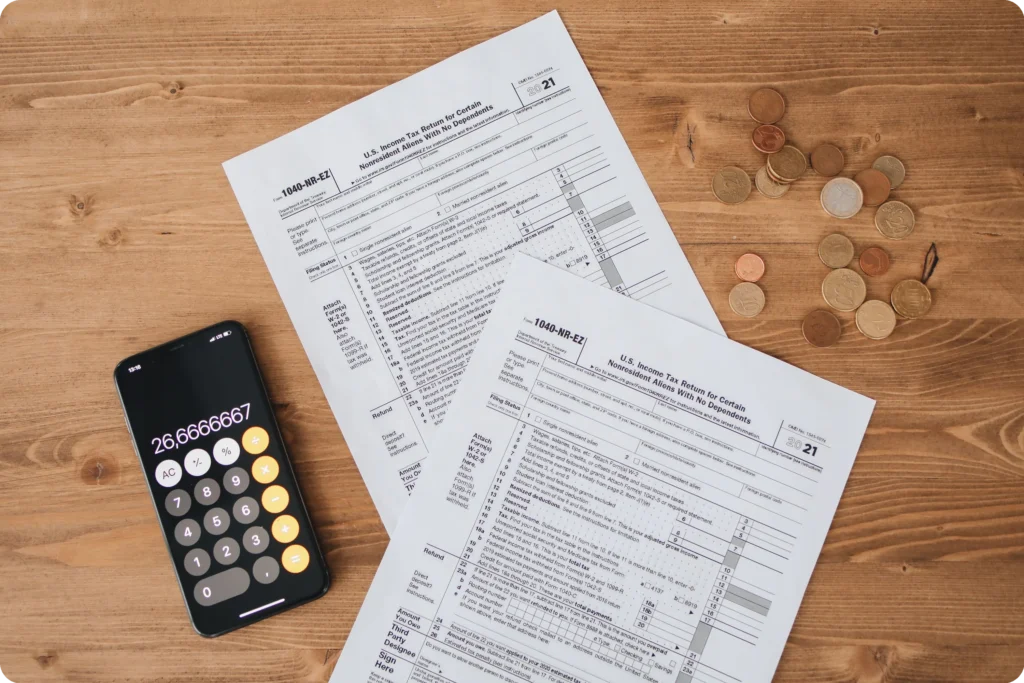
The 1099-K reports gross earnings. According to Airbnb, Box 1a includes the nightly rate, cleaning fees, pass-through taxes Airbnb collects and pays to the host, payouts to co-hosts, and resolution payments received from guests, as applicable. Resolution payments that Airbnb settles itself go on Form 1099-MISC instead. It is reported before Airbnb’s host service fee is deducted.
The bank deposit is the net payout: what remains after the host fee, co-host payouts, and any refunds or negative adjustments. Occupancy taxes that Airbnb collects and remits itself are not part of the gross amount, which is another reason the totals drift apart.
Airbnb’s own example shows how far apart the two numbers can be for a single five-night stay with a co-host who receives 20%:
| Line item | Amount |
| Nightly rate ($100 x 5 nights) | $500.00 |
| Cleaning fee | $90.00 |
| Pass-through taxes and fees | $10.00 |
| Reported on the listing owner’s 1099-K | $600.00 |
| Airbnb host fees | -$18.00 |
| Co-host payout (20% of $572) | -$114.40 |
| Net payout to the listing owner | $467.60 |
Source: Airbnb Help Center, co-host tax reporting example.
Multiply that gap across a year of reservations and dozens of listings, and the 1099-K can sit thousands of dollars above total payouts. If the books only record the $467.60 that reached the bank, there is nothing to explain the other $132.40. If the books record gross revenue, host fees, and co-host payouts as separate line items, the difference explains itself. The fees are real costs of the business, and the common short-term rental tax deductions only help if those costs are captured in the first place.
Who gets the 1099-K when a property manager runs the listing
Who receives the 1099-K depends on how the Airbnb account is set up:
- The owner holds the Airbnb account and the property manager is a co-host. The owner receives a 1099-K for the full gross reservation amount. Airbnb states that co-host payouts do not reduce the amount reported to the listing owner. If the co-host meets the reporting threshold, they receive their own 1099 for those payouts, issued through their own Airbnb account.
- The property manager holds the Airbnb account. Airbnb reports 1099-K income according to the tax information assigned to each payout method, and only one tax form can be linked to a payout method. Whose tax ID appears on the form therefore depends on how payout methods and taxpayer information are set up in the manager’s account.
How rental income that passes through a manager’s account should be treated on each party’s return is a question for a tax professional, ideally an accountant who understands short-term rentals.
The 1099s property managers may owe owners and vendors
Owners. The IRS Instructions for Forms 1099-MISC and 1099-NEC state that a real estate agent or property manager who receives rent must use Form 1099-MISC, Box 1 (Rents), to report the rent paid over to the property owner (citing Treas. Reg. 1.6041-3(d) and 1.6041-1(e)(5), Example 5). Whether and how this applies to a specific short-term rental management arrangement is worth confirming with a tax professional. For payments made in 2026, the federal threshold for rents is $2,000, with inflation adjustments starting in 2027. Which figure belongs in Box 1 when management fees and expenses are deducted before the owner is paid is a judgment call to confirm with a tax professional.
Vendors. Cleaners, maintenance contractors, and other unincorporated service providers may need a Form 1099-NEC. The same $2,000 threshold applies to payments made in 2026.
The practical requirement in both cases is the same. Collect W-9s when a relationship starts, not in January, and make sure every owner’s annual total ties back to their owner statements. An owner who adds up twelve statements and gets a different number than their 1099-MISC will ask why.
How to reconcile your Airbnb 1099-K, step by step
Reconciling the 1099-K means proving that the gross amount on the form, minus documented fees and adjustments, equals what reached the bank.
- Pull Airbnb’s gross figure. In the Earnings dashboard, open Paid, select the tax year, and create a CSV report. Filter the Earnings Year column to the tax year and exclude the Resolution Adjustment and Payout types. Per Airbnb, the total of the Amount and Host Fee columns should match Box 1a.
- Map each form to accounts, listings, and owners. One 1099-K is issued per account or payout method. Note which properties and owners each one covers before comparing totals.
- Bridge gross to net. Subtract host fees, co-host payouts, and refunds or negative adjustments. Whatever does not fit one of those categories needs a documented explanation.
- Tie payouts to bank deposits. Every Airbnb payout should match a deposit in the bank. The free payout reconciliation template is built to match payouts against bank deposits.
- Tie owner income to owner statements. Each owner’s share of the gross should agree with their statements and with any 1099-MISC the business issues them.
- Document the differences and request corrections. Give the accountant the bridge from gross to net. If the name, tax ID, or amount on the form is wrong, Airbnb’s Help Center explains how to request a correction.
These steps fit naturally into a broaderyear-end close checklist, and the remaining tax-season questions are covered in these tax tips for short-term rental property managers.
How Clearing keeps Airbnb income reconciled all year
When the books are reconciled every month, the January 1099-K check becomes a comparison, not a reconstruction.
Bookkeeping in Clearing organizes the money. Each channel payout is broken into line items such as cleaning fees, host fees, and taxes, and every transaction is categorized by property, channel, and transaction type. That is what lets gross revenue and fees sit in the books separately instead of collapsing into a single net deposit.
Reconciliation in Clearing verifies it. Bookings are matched to deposits across OTAs such as Airbnb, Vrbo, Booking.com, and payment processors. Discrepancies are flagged for review rather than discovered at year-end.
From there, property-level P&L and homeowner reports can be filtered by owner, property, and date range. Accountants get their own role to view transactions, adjust categories and property allocations, and prepare tax reports. Data can be also exported to Excel or synced to QuickBooks. Clearing does not replace a tax professional. It gives them reconciled numbers to work from.
Clearing connects with 15+ property management systems, so it works alongside the PMS already running operations. Dwell Escape, which manages about 200 properties, reports saving 60+ hours per month and delivering owner statements by the 7th of each month since switching to Clearing.
Want to see how it works with your listings? Book a free demo.
Frequently asked questions
- Does Airbnb send a 1099 to every host?
No. For calendar year 2026, Airbnb issues a federal Form 1099-K only when a taxpayer has more than $20,000 in gross payments and more than 200 transactions. Some states, including Illinois, Massachusetts, and Virginia, currently have lower thresholds, so a host can receive a state-only form. Rental income must be reported either way. - Why is my Airbnb 1099-K higher than what I was paid?
The Airbnb 1099-K reports gross reservation totals, including cleaning fees, pass-through taxes, and co-host payouts, before Airbnb’s host service fee is deducted. Bank deposits are net payouts after fees, co-host payouts, and refunds. The difference is usually made up of those deductions, which should be recorded separately in the books. - Does the Airbnb 1099-K include occupancy taxes?
It depends on who remits them. Pass-through taxes that Airbnb collects and pays to the host are included in the gross amount. Occupancy taxes that Airbnb collects and remits directly to the tax authority are not included. - Do co-host payouts reduce the listing owner’s 1099-K?
No. Airbnb reports the full gross reservation amount to the listing owner, even when part of each payout goes to a co-host. Co-hosts who meet the reporting threshold receive their own 1099 for the payouts they receive. - Do property managers have to issue 1099s to owners?
Often, yes. The IRS Instructions for Forms 1099-MISC and 1099-NEC state that a property manager who receives rent on an owner’s behalf must report the rent paid over to the owner on Form 1099-MISC, Box 1. For payments made in 2026, the federal threshold is $2,000. A tax professional should confirm how this applies to a specific arrangement, including the amount to report and any exemptions. - When does Airbnb send 1099-K forms?
Airbnb makes 1099-K forms available in the taxes section of the host’s account, and by mail where applicable, generally by January 31 of the year after the reportable calendar year. - What should I do if my Airbnb 1099-K is wrong?
First reconcile the form using the Earnings dashboard CSV, since most differences come from fees and adjustments rather than errors. If the name, tax ID, or gross amount is still incorrect, request a correction through Airbnb’s Help Center and keep documentation of the discrepancy for your accountant.
This article is for general information only and is not tax advice. Consult a qualified tax professional about your specific situation.
Clearing is a Financial Technology Company, not a bank.