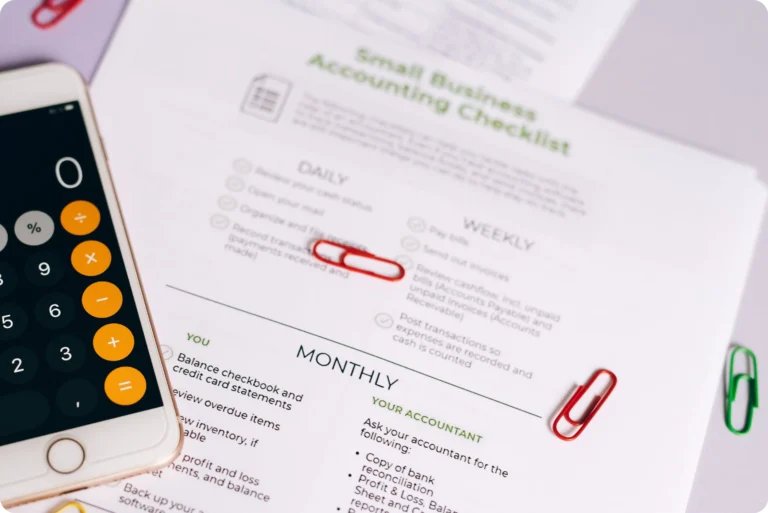
What Is Account Reconciliation?
Account reconciliation compares internal and external records to catch errors early. Learn what it is, how the process works, and why STR makes it harder.

Quick summary: Account reconciliation is the process of comparing two sets of financial records, like a bank statement and your internal books, to confirm they match and to catch any errors or missing transactions. It is a verification step, distinct from bookkeeping, which organizes the records in the first place. For businesses with high transaction volume or money that belongs to someone else, like short-term rental (STR) property managers holding owner funds, reconciliation gets more complex and more important. This guide covers what account reconciliation is, how it works, and why it looks different for reservation-driven businesses.
What Is Account Reconciliation?
Account reconciliation is the process of comparing two independent records of the same financial activity, typically an internal ledger and an external statement, to confirm the numbers agree. If a bank shows $12,450 moved through an account in March and the internal books show the same, the account is reconciled. If the numbers don’t match, reconciliation is the process of finding out why: a missing transaction, a timing difference, a duplicate entry, or an error.
It’s worth being precise about a distinction that often gets blurred: bookkeeping organizes financial records, reconciliation verifies them. Bookkeeping is the ongoing work of recording transactions, categorizing expenses, and keeping the books current. Reconciliation is a separate, periodic check that confirms those records match reality. A business can have tidy, well-organized books that are still wrong if no one has reconciled them against an outside source.

Why Account Reconciliation Matters
Reconciliation exists to catch problems before they compound. Left unreconciled, small errors, a missed fee, a duplicated deposit, a transaction posted to the wrong account, accumulate. By the time they surface in a financial statement or an audit, they can be difficult to trace back to their source.
Regular reconciliation supports a few things at once:
- Accuracy. Financial statements are only useful if the numbers behind them are correct.
- Fraud and error detection. Unauthorized transactions or bookkeeping mistakes are much easier to catch when records are compared regularly, rather than months later.
- Confidence for anyone relying on the numbers. Lenders, investors, auditors, and in some businesses, the people whose money is being held, all depend on reconciled records to trust that reporting reflects reality.
Types of Account Reconciliation
Reconciliation isn’t a single process. The mechanics shift depending on what’s being compared.
Bank reconciliation. The most common form: comparing a bank statement against the internal cash ledger to confirm every deposit, withdrawal, and fee is accounted for.
Credit card reconciliation. Matching card statements against recorded expenses, checking for unauthorized charges or missing receipts.
Intercompany reconciliation. For businesses with multiple entities or subsidiaries, confirming that transactions between them are recorded consistently on both sides.
Vendor and accounts payable reconciliation. Comparing vendor statements against what a business has recorded as owed, to catch billing discrepancies before they turn into disputes.
Trust or escrow account reconciliation. Used when a business holds money on behalf of someone else and must prove, precisely, that the balance held matches what’s owed. Property managers, real estate brokerages, and law firms commonly maintain these accounts, and in many jurisdictions state-level rules govern how client or owner funds are handled. Requirements vary by state. It’s also the most demanding form of reconciliation, because there’s no room for an unexplained difference between what’s held and what’s owed.
How the Account Reconciliation Process Works
The mechanics are consistent across most types of reconciliation, even when the source documents differ:
- Gather the records. Pull the internal ledger and the corresponding external statement, bank, card issuer, vendor, or trust account, for the same period.
- Compare line by line. Match each transaction between the two records.
- Identify discrepancies. Flag anything that doesn’t match: missing entries, timing differences (a transaction posted on different dates in each record), duplicates, or amount mismatches.
- Investigate and resolve. Trace each discrepancy back to its cause and correct the record that’s wrong, or document why a difference is expected (an outstanding check that hasn’t cleared yet, for example).
- Document and sign off. A completed reconciliation should leave a clear record: what was compared, what didn’t match, how it was resolved, and who confirmed it. This is what makes a reconciliation defensible later, in an audit or in a dispute.
A simple example makes this concrete. A business’s internal ledger shows $8,200 in deposits for the month. The bank statement shows $8,150. Reconciliation is the process of finding that $50 gap: maybe a $50 bank fee was deducted but never recorded internally, or a deposit posted on the last day of the month hasn’t cleared the bank yet. Either way, the reconciliation isn’t complete until the $50 is explained and documented, not just noted as a difference.
Who actually does this work varies by business size. In smaller operations, it often falls to the owner or a part-time bookkeeper. As transaction volume grows, it typically moves to a dedicated bookkeeper or accountant, and eventually to reconciliation software that handles the matching step automatically while a person reviews exceptions.
Why Reconciliation Is Harder for Reservation-Driven Businesses
The steps above hold for any business, but the difficulty scales with transaction volume and with how many parties have a claim on the money involved. STR and vacation rental property managers sit at a particularly complex point on that scale.
A single reservation can generate several transactions that all need to reconcile against each other: the guest payment, the OTA’s payout (often net of fees and taxes, and often bundled with dozens of other reservations into one deposit), the owner’s share, the manager’s commission, and any pass-through expenses like cleaning fees. A property manager overseeing even a modest portfolio might be reconciling hundreds of these threads every month, across multiple booking channels, each with its own payout schedule and reporting format.
This is also where reconciliation and trust accounting intersect directly. Because the funds involved usually belong to homeowners, not the property manager, reconciliation isn’t just good practice, it’s often a regulatory requirement. Our step-by-step guide to reconciling a trust account for short-term rentals walks through that monthly process in detail, including how it ties booking data to bank deposits and owner statements.
Common Reconciliation Mistakes and Challenges
A few patterns show up repeatedly, regardless of industry:
- Timing differences mistaken for errors. A transaction recorded on one day but not cleared by the bank until later can look like a discrepancy when it isn’t. Reconciliation has to account for this rather than treat every mismatch as a mistake.
- Manual, spreadsheet-based processes. Matching transactions by hand across multiple statements is slow and error-prone, especially at volume. It’s also difficult to prove, after the fact, that a reconciliation was done thoroughly rather than approximately.
- Bundled payouts. When a single deposit represents dozens of underlying transactions (common with OTA payouts), reconciling at the deposit level instead of the transaction level can hide discrepancies that only show up when something is checked line by line.
- No documented trail. A reconciliation that isn’t recorded, what was checked, what didn’t match, how it was resolved, isn’t defensible later, even if the numbers were actually correct.
- Treating reconciliation as a once-a-year task. Some businesses only reconcile at tax time or year-end close, which means a discrepancy from six months ago has had six months to compound or get harder to trace. The later a mismatch is caught, the more work it takes to unwind.
- Reconciling at the wrong level of detail. Checking that a total matches without verifying the individual transactions underneath it can let real errors cancel each other out on paper, two mistakes of equal and opposite size will still produce a total that appears reconciled, even though neither transaction was actually correct.
How Automation Changes the Reconciliation Process
Manual reconciliation, matching statements by hand in a spreadsheet, doesn’t scale well once transaction volume grows past a certain point, which is exactly what happens as an STR portfolio grows. Automated reconciliation tools change the mechanics rather than the goal: the comparison between internal records and external statements still has to happen, but matching, flagging discrepancies, and maintaining a documented history become part of the workflow rather than a separate manual exercise.
Clearing’s reconciliation feature works this way for STR property managers: starting and ending balances are entered, transactions are matched automatically, and the reconciled amount updates as each one is confirmed. Past reconciliations are saved, so there’s a documented history to point to rather than a one-time snapshot. For property managers handling reservation-driven money movement across multiple properties and owners, that history matters as much as the reconciliation itself.
If you’re building out a broader trust accounting workflow rather than just the reconciliation step, our complete guide to trust accounting for short-term rental managers covers the full picture: compliance considerations, best practices, and how the pieces fit together.
FAQ
- What is the difference between reconciliation and bookkeeping?
Bookkeeping is the ongoing process of recording and organizing financial transactions. Reconciliation is a separate, periodic check that compares those records against an outside source, like a bank statement, to confirm they’re accurate. A business can have well-organized books that are still incorrect if they haven’t been reconciled. - How often should account reconciliation be done?
Most businesses reconcile bank and credit card accounts monthly, aligned with the statement cycle. Businesses handling higher transaction volume or holding funds on behalf of others, such as STR property managers with trust accounting obligations, often reconcile more frequently to catch discrepancies before they compound. - What happens if an account doesn’t reconcile?
An unreconciled discrepancy means the internal records and the external statement disagree, and the cause hasn’t been identified yet. The next step is investigation: tracing the specific transaction or transactions responsible, rather than adjusting either record to force a match. - Is trust account reconciliation different from regular reconciliation?
The mechanics are similar, comparing internal records against an external statement, but the stakes are higher. Trust accounts hold money that belongs to someone else, so an unresolved discrepancy isn’t just a bookkeeping issue, it can indicate funds are out of place. Many states require documented, regular reconciliation of trust accounts for this reason. - Can account reconciliation be automated?
Yes. Automated reconciliation tools match transactions between internal records and external statements, flag discrepancies for review, and maintain a documented history of past reconciliations. For vacation rental managers specifically, this matters more than it does for a typical business: reservation-driven money movement means far more transactions to match per month, often across multiple OTAs and owners. Clearing automates that matching for STR portfolios, so reconciliation scales with the number of properties and bookings instead of the number of hours available to do it by hand.