Why STR Property Managers Need Specialized Accountants & Purpose-Built Accounting Software
Why short-term rental property managers need accountants who understand trust accounting, OTA payouts, and state-specific compliance rules.

Quick summary: Short-term rental accounting involves fiduciary trust funds, multi-channel OTA payouts, and state-specific regulatory requirements that general bookkeepers rarely encounter. Property managers who work with STR-specialized accountants, supported by purpose-built accounting software, reduce the risk of misallocated owner funds and reconciliation errors. This guide explains what makes STR accounting different, why specialization matters, and where software and human expertise fit together.
What Trust Accounting Means for STR Property Managers
Trust accounting is the foundation of responsible financial management for short-term rental property managers. It refers to the handling of client funds, including rental income, security deposits, and advance payments, that a property manager collects on behalf of property owners. These funds are not the manager’s revenue. They are held in trust until they are properly allocated and distributed.
This is different from operational accounting, which covers a management company’s own income, expenses, payroll, and taxes. Trust accounting is rooted in fiduciary duty. It requires strict segregation of client funds from operating accounts, detailed owner ledgers, and regular reconciliation. Several states, including North Carolina, Florida, and Oregon, have specific requirements around trust account structure and disbursement timelines. Failing to follow these protocols can result in severe compliance violations, penalties, or even loss of licensure.
Bookkeeping and reconciliation are related but distinct parts of this process. Bookkeeping organizes the financial picture: recording transactions, categorizing income and expenses, and maintaining ledgers by property and owner. Reconciliation verifies that picture: matching bank deposits, booking data, and trust balances to confirm nothing was missed or misallocated. A property manager can have clean bookkeeping and still miss a reconciliation error, which is why STR accounting depends on both functions working together, not just one.
Why STR Accounting Is More Complex Than General Bookkeeping
Many operators assume STR bookkeeping is similar to any small business’s finances. In practice, it carries more moving parts:
- Diverse revenue streams. Income arrives from Airbnb, Vrbo, Booking.com, direct bookings, and sometimes corporate housing partners, each with its own payout structure and timing.
- Bulk OTA payouts. OTAs often bundle earnings from multiple bookings and properties into a single deposit, which makes matching each dollar back to the right guest and owner difficult without a systematic process.
- Pass-through and reimbursable expenses. Cleaning fees, repairs, and supplies paid by the manager and later reimbursed from owner funds require careful attribution, both for accuracy and for compliance.
- Variable owner distributions. Payout timing, reserve holdbacks, and performance-based splits vary by contract, so there is no single standard payout model to automate against.
- Jurisdiction-specific tax obligations. Occupancy and transient lodging taxes are typically tracked at the booking level and vary by location, separate from revenue and management fees.
All of these dimensions require booking-level detail for accurate reconciliation. Attempting to keep proper owner balances, distribute funds correctly, and meet trust accounting standards with a generic accounting approach will often result in errors, under‑reconciliation, and compliance exposure. Traditional accountants unfamiliar with the industry frequently underestimate these requirements, leading to inefficiencies or regulatory missteps.
Why Specialized Accountants and Bookkeepers Matter
Working with an accountant or bookkeeper who handles a mix of client types, without STR-specific depth, can leave gaps that are hard to see until an owner disputes a statement or a state audit surfaces a discrepancy. Accountants who specialize in STR bring a few concrete advantages:
- Greater accuracy and fewer costly errors. STR accounting specialists understand the nuances of multi-channel OTA revenue, cleaning fee treatments, and owner split arrangements. This experience greatly reduces the risk of misallocated funds or owner disputes.
- Familiarity with trust accounting regulation. STR-focused accountants track evolving state requirements, which reduces the chance that a workflow falls out of step with current rules.
- Efficiency at scale. Established STR accounting patterns and STR-aware software let these professionals handle monthly close and reconciliation faster as a portfolio grows.
- More defensible pricing decisions. Specialists have a clearer reference point for what expense allocations, management fee structures, and owner reserves are standard, which helps operators avoid arrangements that draw owner pushback.
None of this means a generalist accountant cannot serve an STR business well. It means the learning curve and error risk are meaningfully higher without STR-specific experience, and property managers evaluating a service provider should ask directly about that experience.
Where Purpose-Built Software Fits Alongside a Specialized Accountant
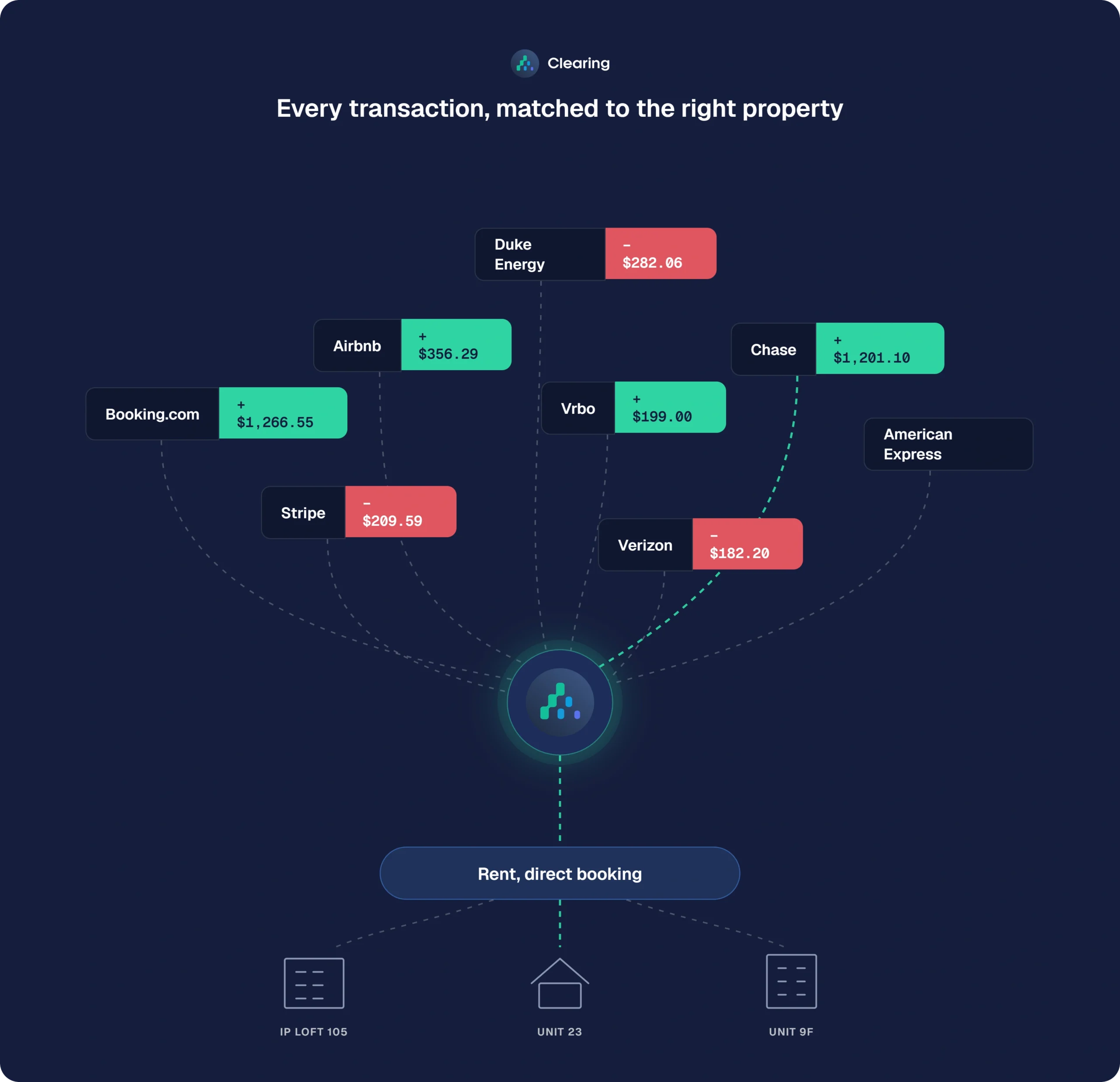
Software and a specialized accountant are not substitutes for each other. Software like Clearing automates the mechanical parts of trust accounting: matching OTA payouts to bookings, allocating revenue and expenses by property and owner, and generating owner statements and ledgers. Clearing integrates with property management systems to pull booking and revenue data at a granular level, which reduces the manual reconciliation work that used to consume hours each month.
An accountant still plays a role software does not replace: interpreting how a specific state’s requirements apply to a business’s structure, advising on pricing and fee arrangements, and reviewing the judgment calls that automation cannot make on its own. The two work best together.
How Clearing Works With STR-Specialized Accounting Partners
Clearing’s role in this ecosystem extends past the software itself. Clearing partners with accounting and bookkeeping firms that focus specifically on STR clients, building workflows around shared clients who need trust accounting accuracy rather than a general small-business setup. This includes platform training so partner firms can support their clients accurately inside Clearing, and educational resources such as guides and webinars on trust accounting compliance, owner statement accuracy, and OTA payout reconciliation.
Property managers who are not currently working with an STR-specialized accountant, or who are unsure whether their current provider has this depth of experience, can browse Clearing’s accounting and bookkeeping partner firms directly to see who fits their portfolio.
FAQ
- What is the difference between trust accounting and regular bookkeeping for STR property managers? Trust accounting handles funds a property manager holds on behalf of owners, such as rental income and deposits, and requires those funds to be segregated from the manager’s own operating accounts. Regular bookkeeping covers the management company’s own income and expenses. STR businesses typically need both, managed separately.
- Do I need a specialized accountant if I already use trust accounting software? Software automates the mechanical work of reconciliation and owner statements, but it does not replace an accountant’s judgment on how state-specific trust accounting rules apply to a particular business, or advice on pricing and fee structures. Most operators benefit from both.
- What makes STR accounting more complex than accounting for other small businesses? STR accounting involves multiple OTA revenue streams with different payout structures, bulk deposits that bundle several bookings together, pass-through expenses that must be reimbursed accurately, and jurisdiction-specific occupancy taxes, all of which require property-level and owner-level tracking that general bookkeeping does not typically address.
- How do I find an accountant who specializes in short-term rental trust accounting? Look for accountants or bookkeeping firms who name STR or vacation rental trust accounting as a specific service area, ask about their experience with OTA payout reconciliation and state trust accounting rules, and confirm they are familiar with the software your business uses to manage trust funds.
Clearing is a Financial Technology Company, not a bank.