
How to Build Short-Term Rental Management Year-End Owner Statements That Actually Tie Out
Year-end is one of the most stressful times for Short-Term Rental (STR) property managers... especially when it comes to preparing clean, reconciled owner statements. Owners expect clear answers around income, expenses, taxes, and deposits, and any mismatch between your statements, books, and trust account balances can lead to time-consuming questions and eroded trust. This guide walks you through how to generate year-end owner statements that actually tie out (statements that match your accounting system, trust account, and transaction records down to the last dollar).
December 12, 2025
Corey
.png)
How to Build Year-End Owner Statements That Actually Tie Out

Why Year-End Owner Statements Are So Critical for STR Property Managers
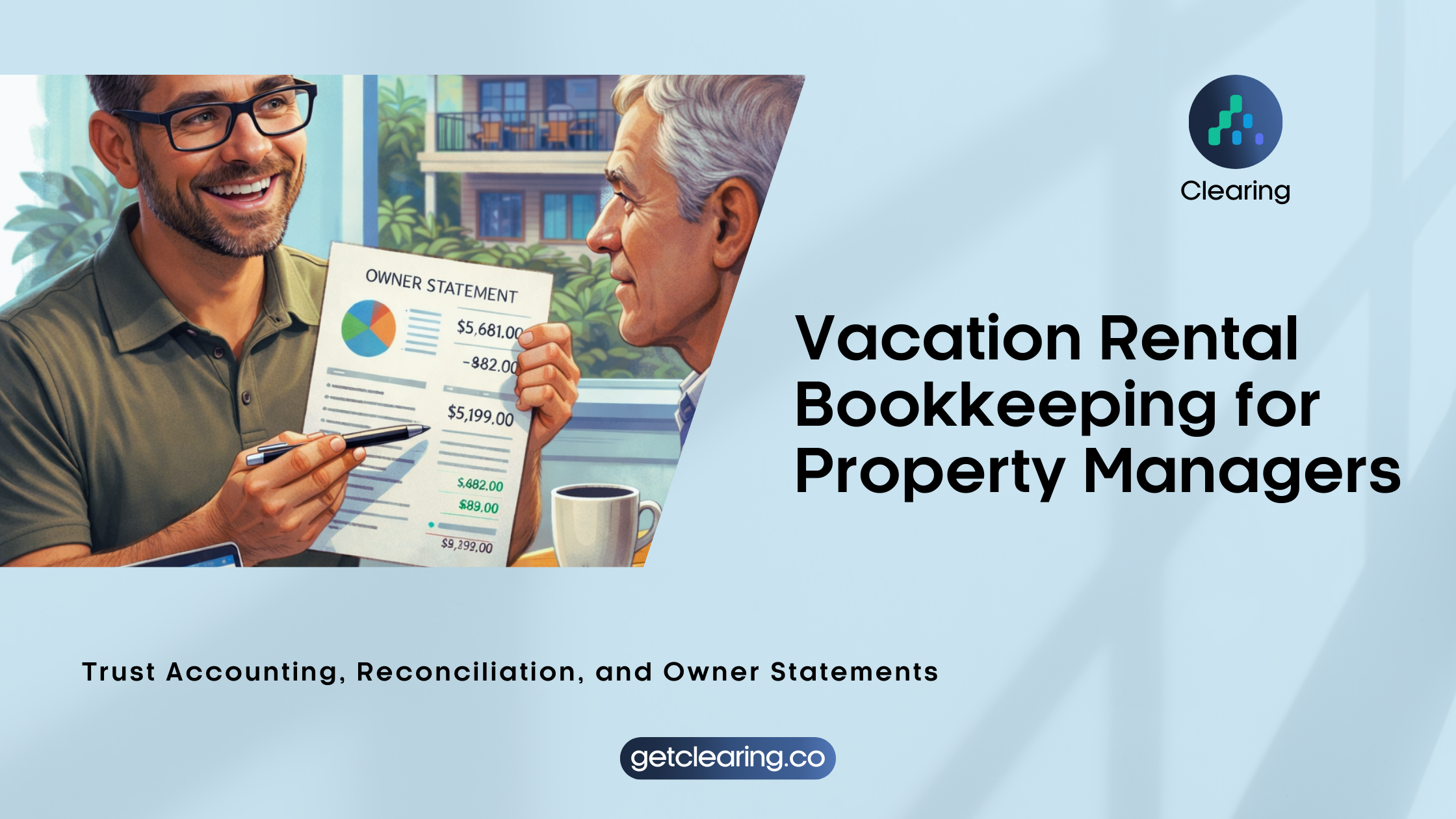
As the calendar closes out, Short-Term Rental (STR) property managers face one of the highest-stakes tasks of their year: producing year-end owner statements that are accurate, reconciled, and trust-account compliant. Owners demand precise answers about rental income, operating expenses, taxes, and deposits, all of which feed directly into their personal tax filings and long-term investment decisions.
Financial transparency at year-end isn’t a “nice to have”... it’s mission-critical.
When statements don’t reconcile with your books and trust account balances, January quickly turns into a stressful fire drill of explanation and correction. At best, this means a tidal wave of support emails; at worst, it creates suspicion about your financial controls and long-term professionalism. Clean, accurate reporting builds lasting trust, giving owners the confidence to stay and refer others.
What Owners Expect in a Year-End Summary
Sophisticated owners, especially those with multiple properties or institutional backgrounds, expect more than basic number dumps. They want statements and financial reports that are clear, comprehensive, and ready for tax filing. The most effective statements anticipate their accountant’s questions and leave no gaps for ambiguity.
Well-constructed year-end owner documentation should include:
- Gross rental income
- Breakdown by booking channel (Airbnb, Vrbo, direct bookings, etc.) and seasonality
- Deductions for management fees and Online Travel Agency (OTA) commissions
- Operating expenses and capital improvements, broken out with detail
- Transparent distinction between owner-paid and manager-paid charges
- Withheld taxes and status of guest security deposits
- Final net payout calculation
- Bonus: high-level metrics like occupancy percentage, Average Daily Rate (ADR), and comparative property-level performance
Presenting these items clearly not only helps owners understand their financial picture but also reduces repetitive clarification requests. Reporting that cover these bases become easy tools for owners and their tax professionals, cutting down on frustration and making your business stand out for professionalism.
Common Pain Points and Mistakes STR Property Managers Make

Despite good intentions, many year-end financial deliverables fall short in ways that result in additional work for both managers and owners. The most common pain points often stem from process gaps or manual workarounds:
- Property management system (PMS) reports that fail to align with actual cash flows
- Lack of clarity over tax deductions, capital upgrades, or shared expenses between properties
- Totals that don’t match booking platform payout records, sparking time-consuming owner disputes
- Heavy over-reliance on spreadsheets and manual journal entries, which introduce error and lack audit trails
- No easy way to tie statements back to monthly trust account reconciliations
- The all-too-familiar scenario: An owner reaches out and asks, “Why don’t these numbers add up to the payout I received?” leading to a frustrating back-and-forth
For example, a property manager may send a year-end statement showing $50,000 in income and $5,000 in repairs, yet the owner’s tax accountant notices deposits to the owner’s bank account add up to only $43,800. If the statement lacks clarity on withheld deposits and timing differences, this simple mismatch can result in hours of follow-up - and owners can lose faith in your process.
The Gold Standard: Owner Statements and Financial Reporting That Ties Out

To “tie out” means that every number on your owner statement can be directly traced back (line by line) to both your accounting general ledger and the trust bank account balance. This level of precision and transparency is critical, not only for owner confidence, but also for regulatory compliance (where applicable).
Achieving this standard requires:
- Monthly reconciliation of trust (and operating) accounts, so you can always validate that disbursed amounts match statement outputs
- Real-time, accurate categorization of income and expense transactions
- Owner access to statements and supporting details, with role-based permissions safeguarding sensitive company data
- Automated reporting tools that eliminate manual rekeying and limit human error
- Comprehensive audit trails and linked backup documentation for every transaction or adjustment
In practice, tying out is your strongest defence against owner disputes and audit concerns. It not only proves your attention to detail but also signals a professionalism that attracts and retains high-value owner clients.
Best Practices for Clean Year-End Short-Term Rental Owner Reporting
Elevating your reporting starts well before December. Here are tactical steps to ensure your year-end output is audit-ready, stress-free, and trusted by owners and accountants alike:
- Reconcile all bank, booking, and trust balances monthly. Waiting until year-end increases error risk and creates a last-minute scramble.
- Break out taxes, OTA/management fees, and all capital improvements as separate line items. Owners (and their CPAs) will ask, so anticipate the need.
- Maintain digital copies of all receipts, invoices, and supporting documents attached to expenses. Nothing builds confidence like easily accessible backup.
- Label every charge with full clarity as owner-paid or manager-paid, especially for mixed expenses like shared utilities or hospitality upgrades. Avoid ambiguity that creates reporting headaches later.
- Leverage automation and templates wherever possible. Automated systems like Clearing enforce consistency and completeness, reducing manual errors.
- Send year-end statement packages to owners early (ideally by mid-January), leaving time for review before tax deadlines and minimizing last-minute follow-up.
Implementing these habits helps eliminate the January panic and positions your business as an industry leader in reporting and transparency.
How Clearing Helps STR Property Managers Deliver All of This
Clearing is designed from the ground up to solve the exact pain points STR property managers face when creating year-end owner statements:
- Each booking, payout, and expense is tracked at the transaction level, so you never have to wonder where a dollar went
- Integrated expense categorization ties every cost back to a corresponding real transaction
- Automated statement generation ensures every owner statement fully reconciles with trust account activity
- Withheld tax liabilities and security deposits are factored in, eliminating unpleasant surprises at tax time
- Simple export of year-end packages - complete with detailed breakdowns and backup documentation - saves hours previously lost to manual spreadsheet updating
- By reducing discrepancies and confusion, Clearing shrinks your January support volume, freeing you up to focus on growth and client service
For STR managers who have previously suffered through “why is this wrong?” calls from anxious owners, the difference is night and day: accurate, accessible reporting means everyone is on the same page, all of the time.
Final Thoughts: Year-End Owner Reporting Builds Trust and Loyalty

Professional, transparent reporting does more than smooth over tax season. It’s how you demonstrate integrity, win client referrals, and reduce risk of regulatory trouble long term. Too often, businesses lose valuable owners after a single year-end misstep that casts doubt on their financial management. Cleaner owner statements mean cleaner books, easier audits, and more reliable relationships.
If you’re a Short-Term Rental property manager ready to eliminate January fire drills and deliver year-end owner statements with total confidence, book a Clearing demo to see a sample year-end statement today. Learn how automation and precision make seamless reporting your new normal.
Clearing is a Financial Technology Company, not a bank.


.png)
.png)



.png)
.png)

.png)
.png)
.png)
.png)
.png)
%20(1).png)
%20(1).png)
%20(1).png)
.png)
%20(2).png)
%20(1).png)
%20(1).png)
.png)

.png)
.png)
.png)
%20(1).png)
.png)
.png)
.png)
.png)
.png)
.png)
.png)
%20(1).png)
.png)
.png)
.png)
%20(1).png)
%20(1).png)
%20(1).png)


.jpg)
%20(1).png)
%20(1).png)
%20(2).png)
%20(1).png)

%20(1).png)
%20(1).png)
%20(1).png)


%20(1).png)
%20(1).png)
%20(1).png)
%20(1).png)
%20(1).png)


%20(1).png)
%20(1).png)
%20(1).png)
%20(2).png)
%20(2).png)


%20(2).png)


%20(2).png)
%20(1).png)
.png)


%20(2).png)
%20(2).png)

.jpg)
.png)
.png)
.png)